
Who is buried at the Invalids’ Cemetery?
Those buried here include Gerhard von Scharnhorst, Marga von Etzdorf, Gotthilf Hagen and Ernst Troeltsch. This selection introduces eight people and shows how to recognise their graves. It is not a complete name register. For other people, follow the grave-search guide.
Notable graves: people, photographs and locations
Selected people
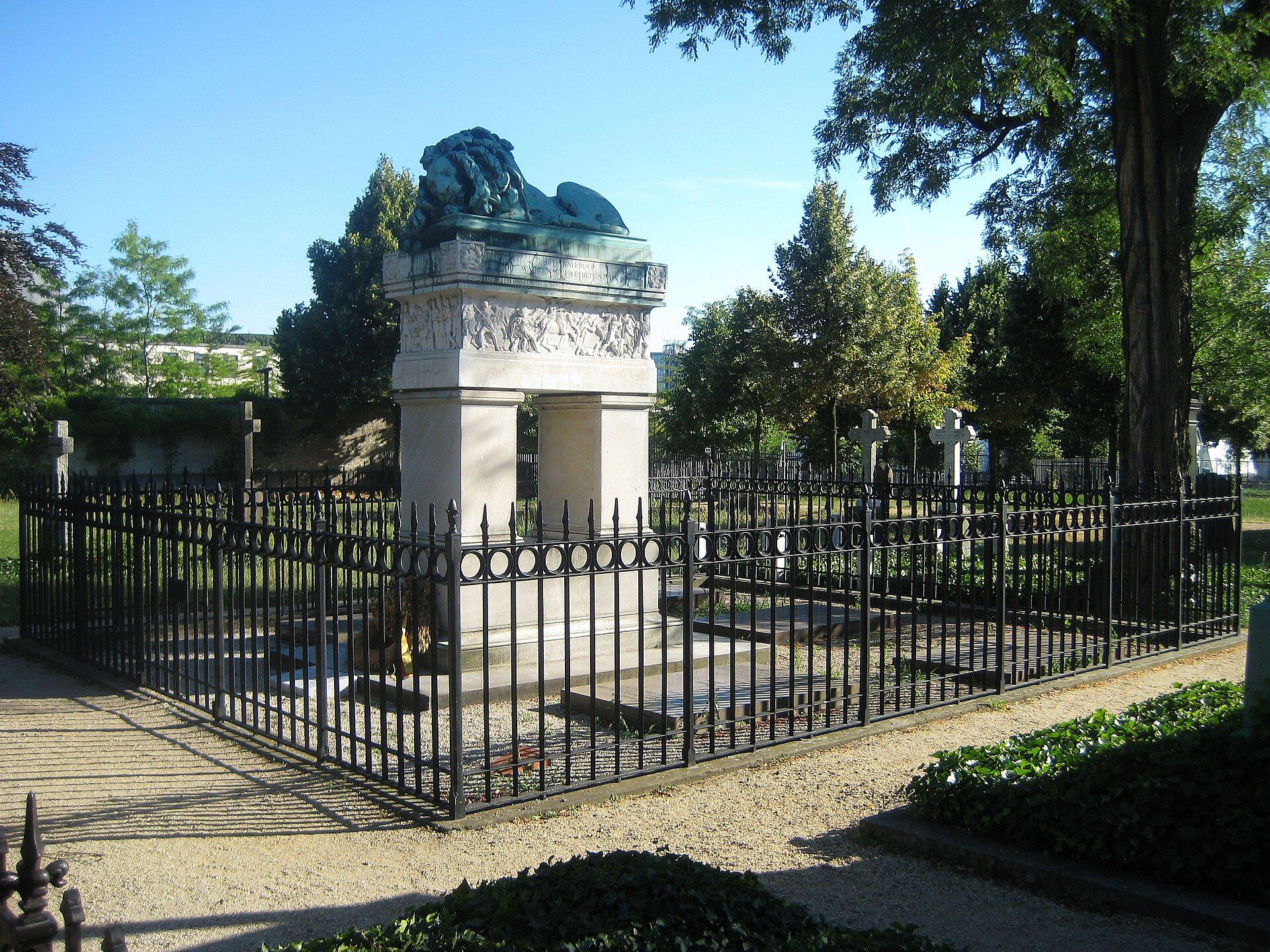
8 documented gravesGerhard von Scharnhorst’s grave monument Reform and state
Gerhard von Scharnhorst
1755–1813
Section C · lion monumentThe Prussian military reformer’s remains were brought from Prague in 1826. Completed in 1834, the monument combines Karl Friedrich Schinkel’s architecture with Christian Daniel Rauch’s reclining bronze lion and reliefs by Friedrich Tieck. Look beyond the lion: the sides of the base also form part of the monument’s story. Both the burial here and the monument postdate Scharnhorst’s death by many years.
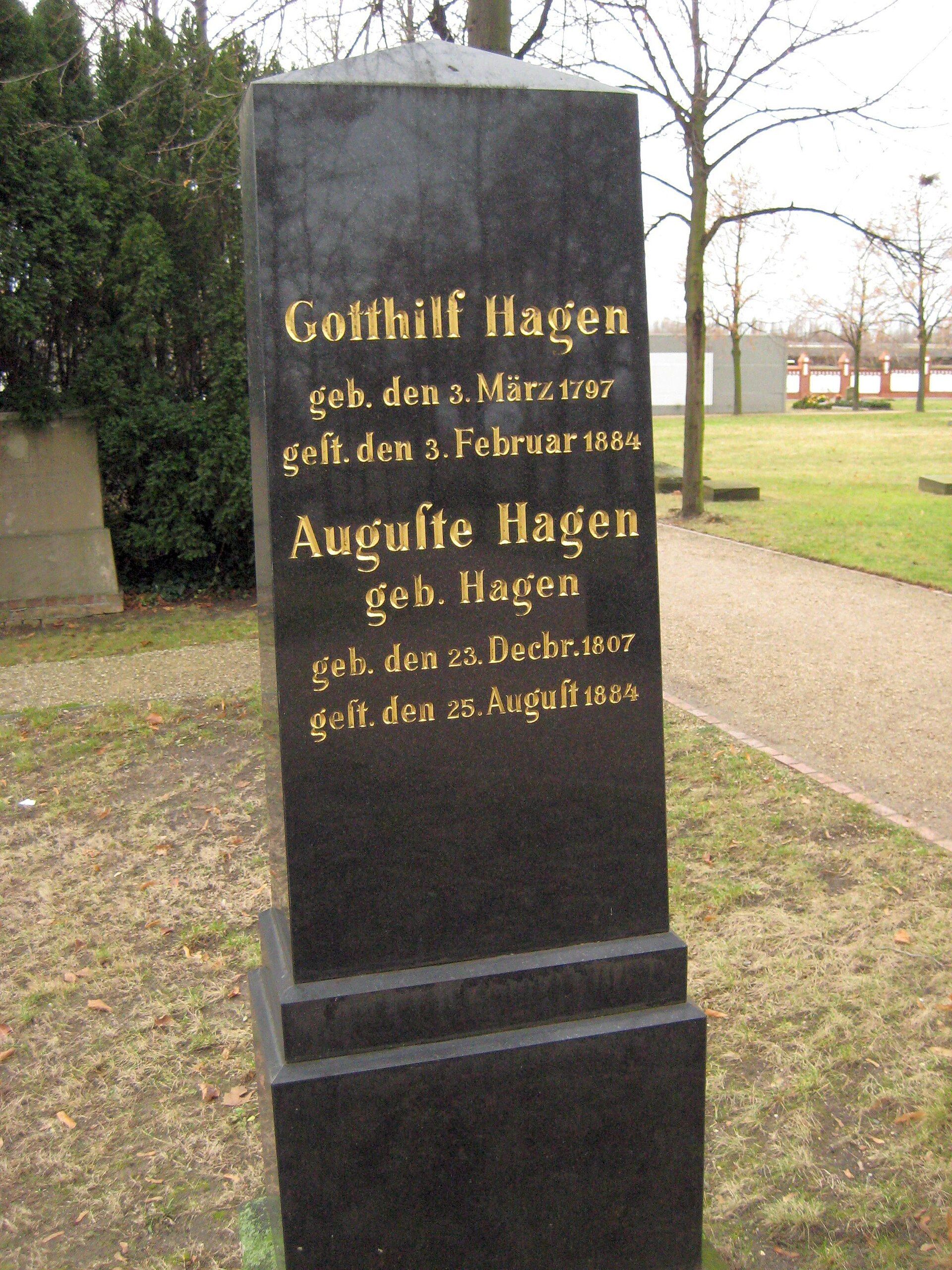
View mapGotthilf Hagen’s grave monument Engineering
Gotthilf Hagen
1797–1884
Section C · black steleGotthilf Hagen was a hydraulic engineer. The black stele also names his wife Auguste: it is a shared family memorial, not simply a monument to a professional career. Among the more conspicuous military monuments, this grave recalls the civilians buried here during the nineteenth century. Look for both spouses’ names rather than only the better-known surname.
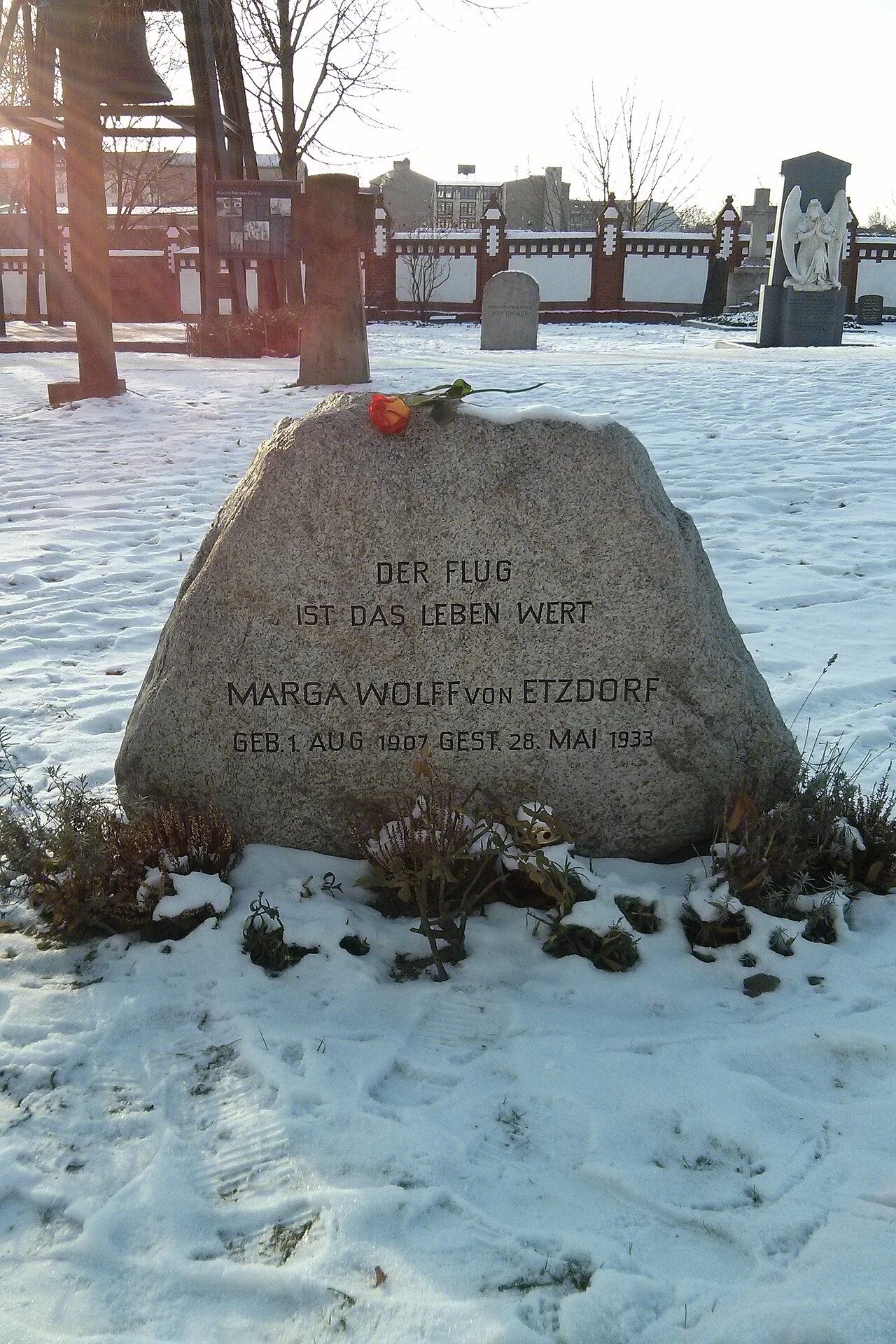
View mapMarga von Etzdorf’s grave marker Aviation
Marga von Etzdorf
1907–1933
Boulder with a personal inscriptionAviator Marga von Etzdorf is one of the women whose stories can be explored here. Her boulder bears the words she chose, “Der Flug ist das Leben wert” — roughly, “Flight is worth life itself.” Rather than elaborate sculpture, the memorial uses a short inscription and the natural shape of the rock. Compare that approach with the lion on Scharnhorst’s monument.
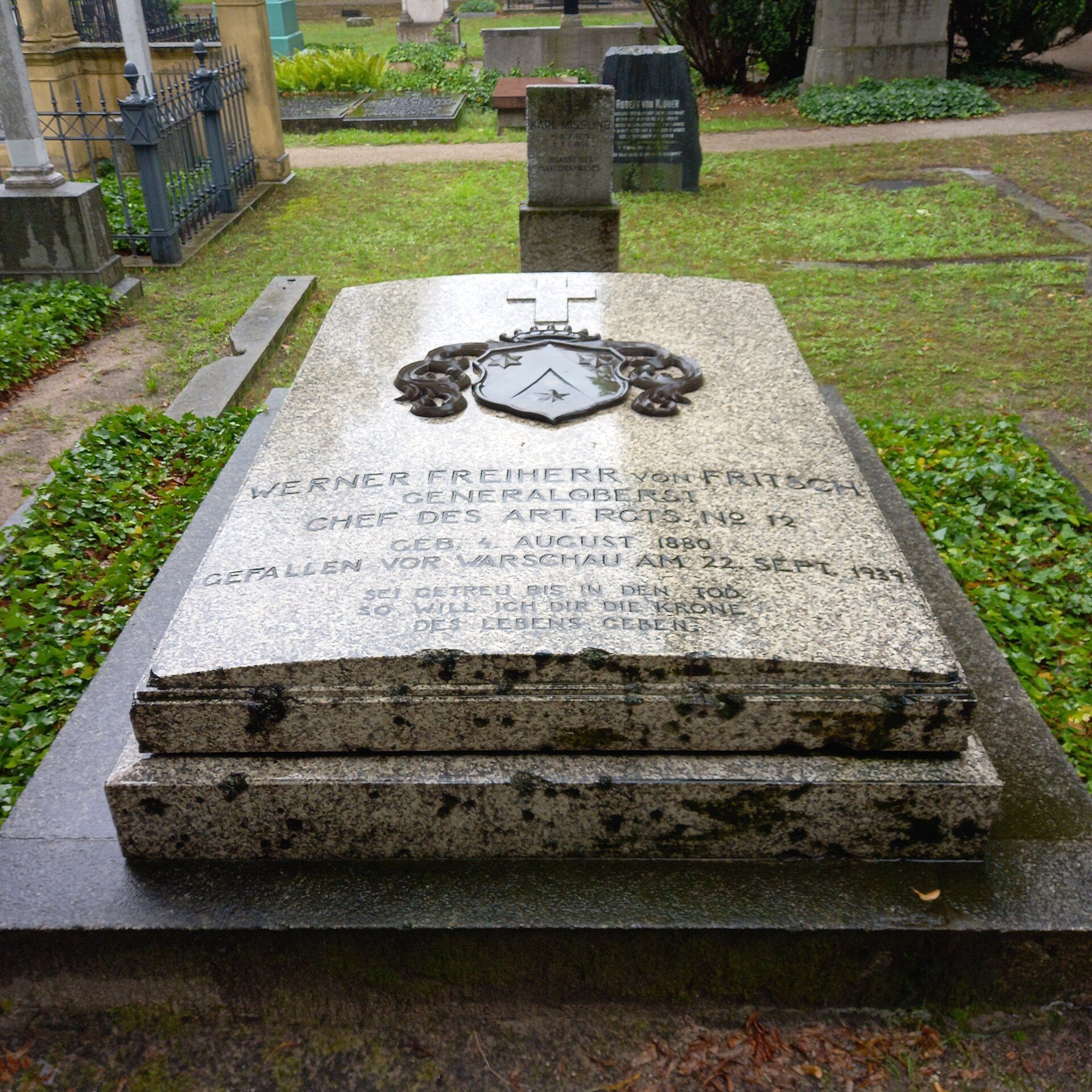
View mapWerner von Fritsch’s grave monument Military history
Werner von Fritsch
1880–1939
Sarcophagus-shaped stone slabWerner von Fritsch was a former commander-in-chief of the German Army. His surviving 1939 monument is a heavy stone slab shaped as a false sarcophagus.
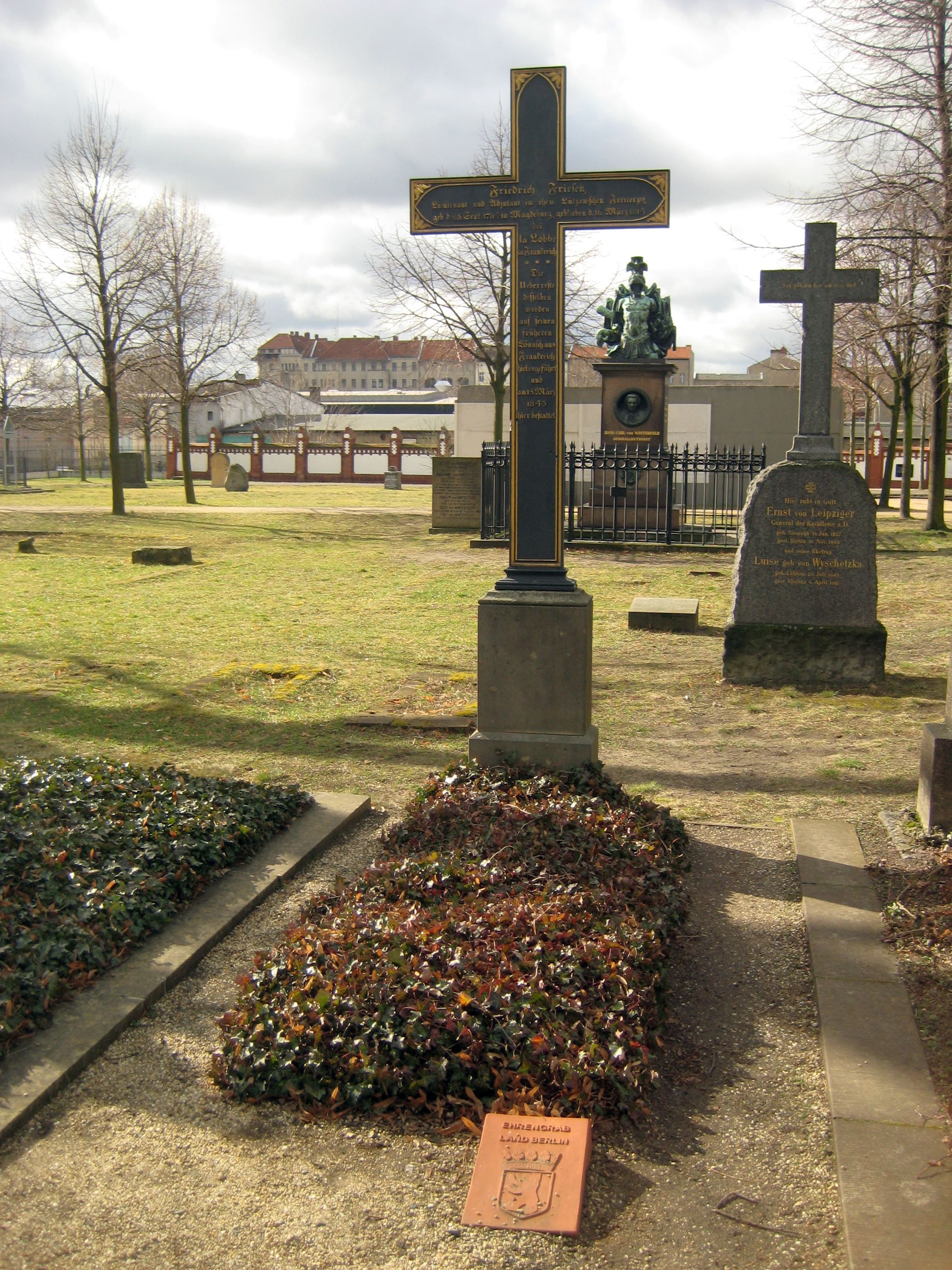
View mapFriedrich Friesen’s grave cross · photographed in 2008 Education and religion
Friedrich Friesen
1784–1814
Section C · cast-iron crossThe educator and co-founder of the German gymnastics movement died in France in 1814 but was not buried in Berlin until 1843. His black cast-iron cross with gold ornament contrasts with the surrounding stone monuments. Its lengthy inscription describes the transfer of his remains, making the long interval between death and burial here part of the memorial itself.
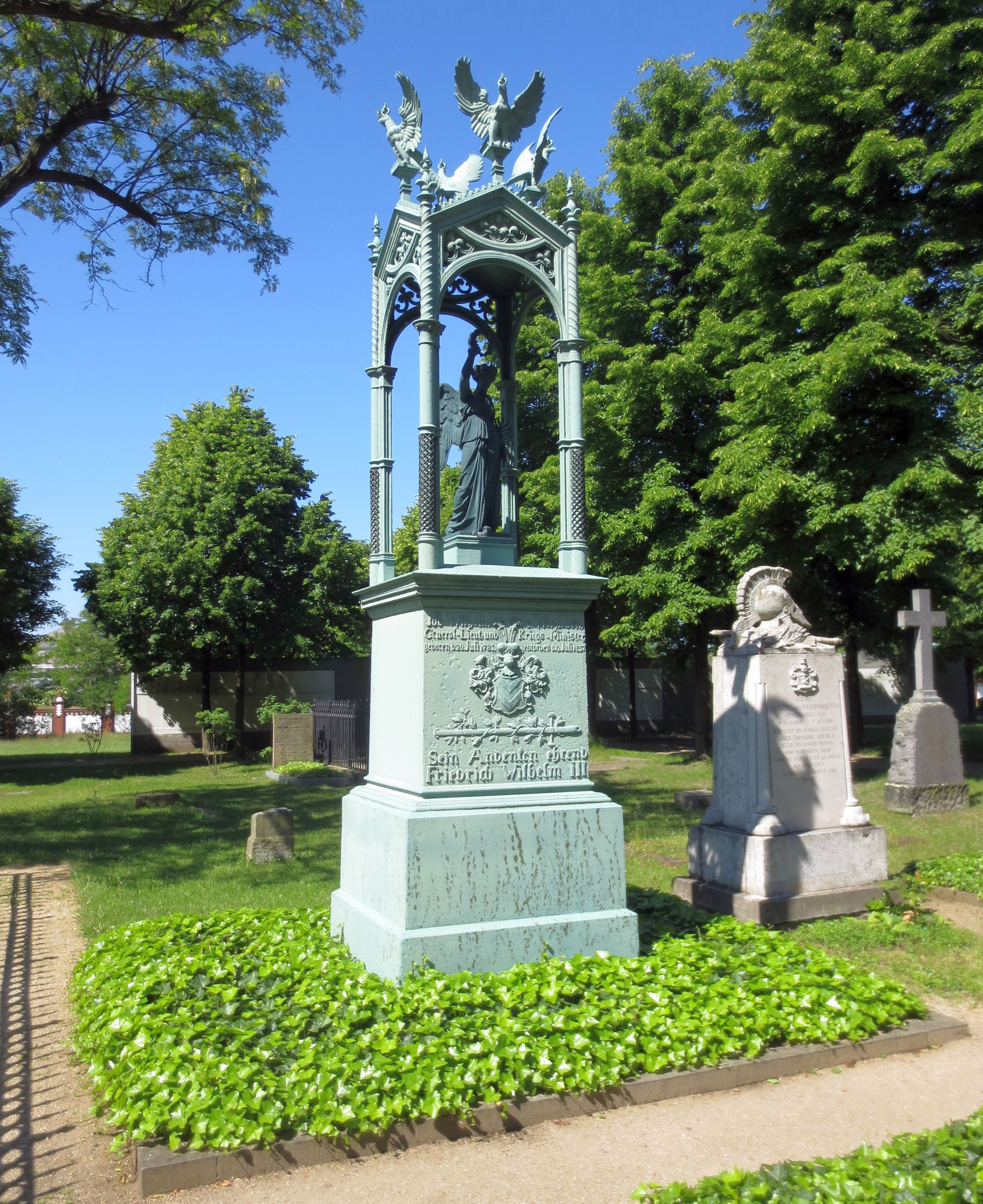
View mapJob von Witzleben’s monument designed by Schinkel · photographed in 2013 Reform and state
Job von Witzleben
1783–1837
Section C · Schinkel monumentThe Prussian minister of war is commemorated by a monument designed by Karl Friedrich Schinkel. A winged Victory stands beneath its green canopy, with eagles above. Instead of a solid gravestone, it resembles a small open architectural structure. Do not confuse him with Ferdinand August von Witzleben, who is also buried in this cemetery.
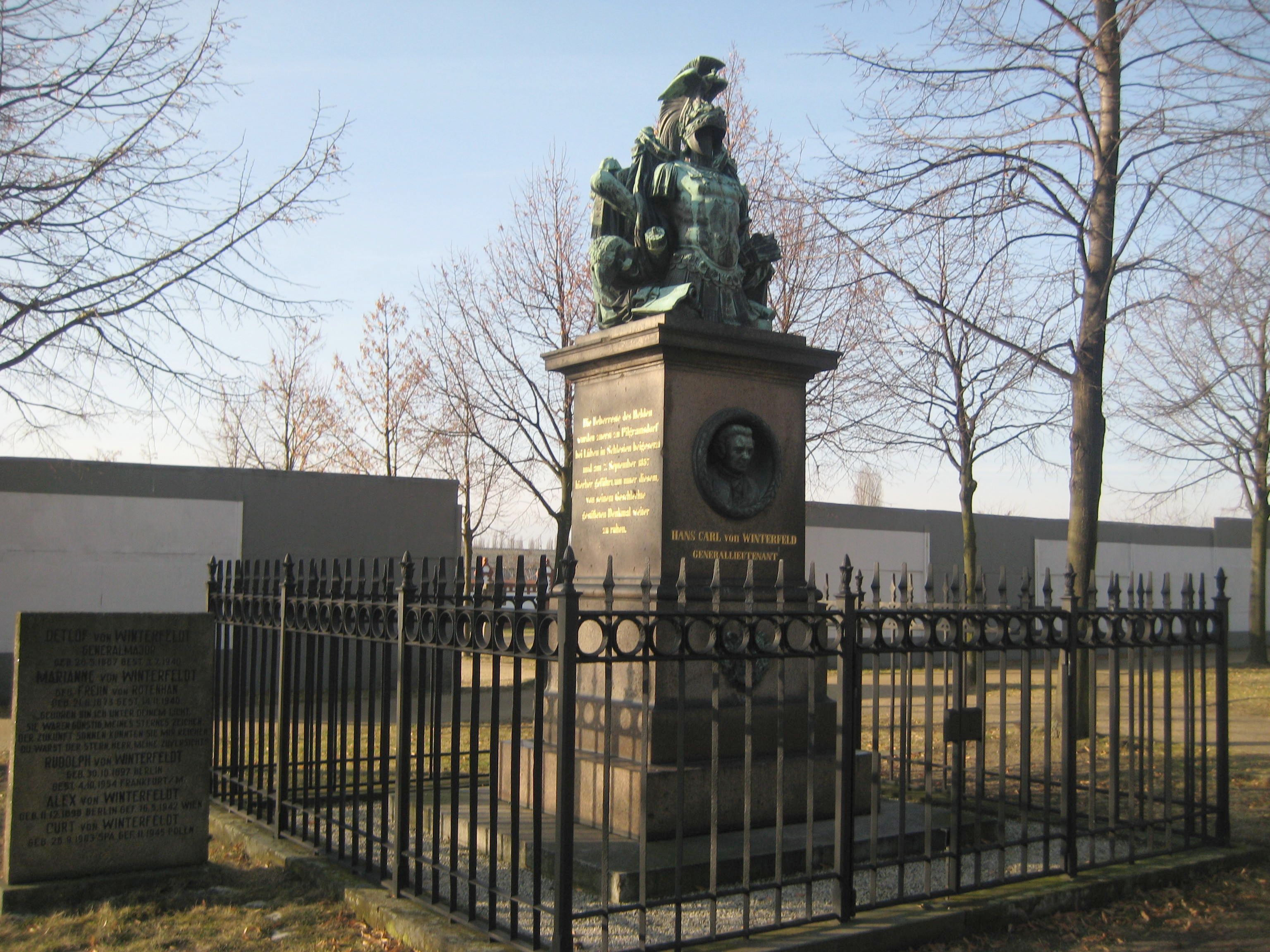
View mapWinterfeldt’s monument in front of the hinterland wall · photographed in 2008 Military history
Hans Karl von Winterfeldt
1707–1757
Section C · monument with portrait medallionWinterfeldt was a general and confidant of Frederick II. His monument by Heinrich von Ledebur has a portrait medallion and military ornament within an iron enclosure. The inscription spells his name “Hans Carl von Winterfeld”. In the photograph, the hinterland wall appears behind it: Prussian commemoration and Berlin’s later division occupy the same view.
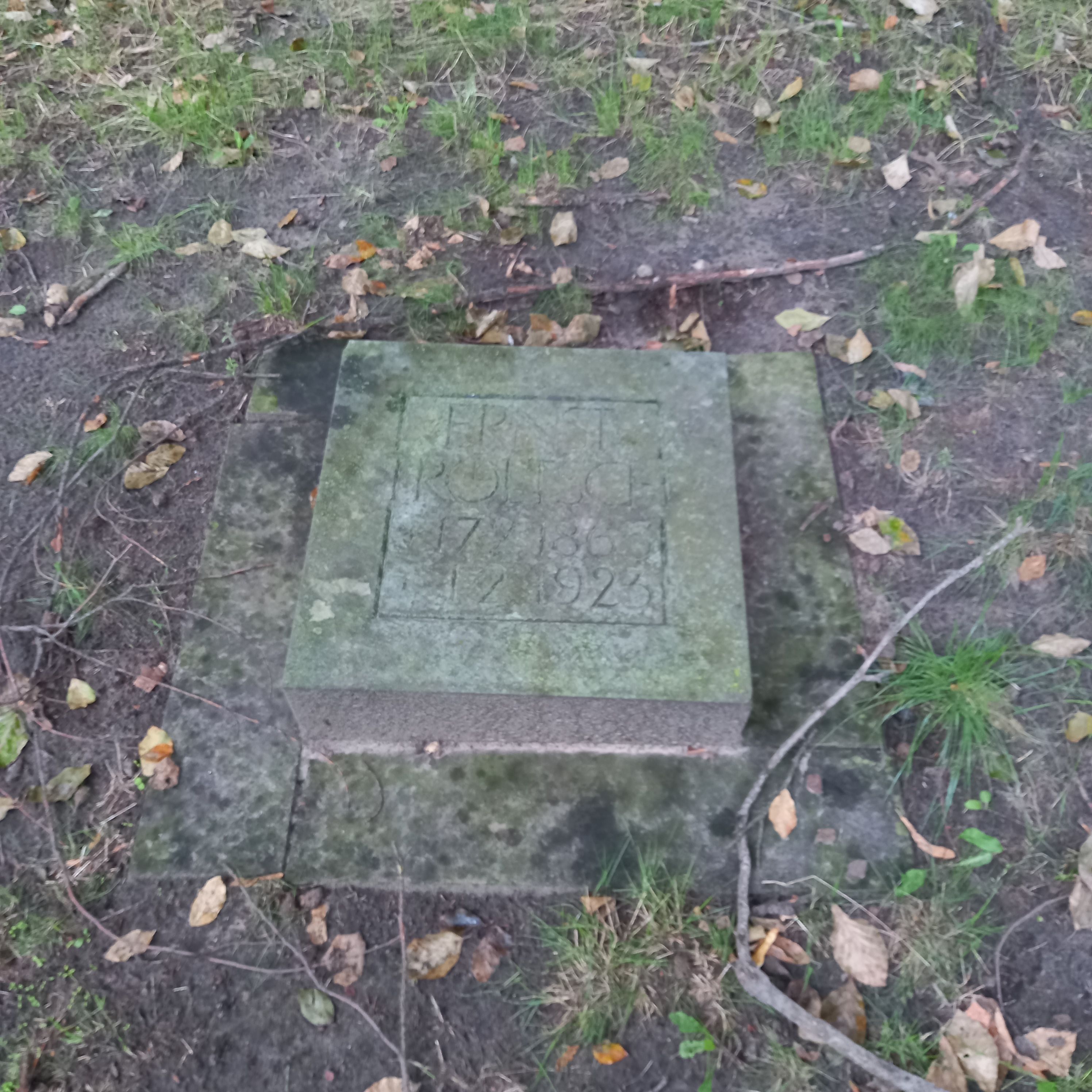
View mapErnst Troeltsch’s replacement stone · photographed in 2023 Education and religion
Ernst Troeltsch
1865–1923
Section B · replacement stoneThe Protestant theologian represents the cemetery’s scholarly and civilian history. His original large boulder monument was lost after 1945. A low replacement stone now marks the grave. It does not reproduce the earlier monument: it restores the name to the location while leaving the loss of the original memorial apparent.
View map
Use “View map” to open the corresponding grave location. The photographs were taken in different years and do not document today’s condition. For a connected visit, the cemetery tour combines selected graves with the Wall remains.
Is Manfred von Richthofen still buried here?
No. His remains were transferred to Wiesbaden in 1975. A memorial at the former location is therefore not his present grave. This distinction also matters when consulting old plans and historical lists of burials.
Why do the monuments look so different?
A surviving monument, a restored grave and a replacement stone tell different stories. Troeltsch’s low stone marks the loss of an earlier monument, while Scharnhorst’s grave retains an elaborate artistic composition. Historical grave types explains the forms; the cemetery’s history explains the losses.
Inclusion in this directory is not an honour or an endorsement of a person’s life. Twentieth-century military biographies in particular need to be considered in terms of individual roles and responsibility.